
One of the reasons Stickman Hook stays fun for so long is its level design. The controls are simple, but each stage changes the timing, swing angle, obstacle placement, and momentum flow just enough to keep the game interesting.
If you have been wondering how the level system works, why some stages feel much harder than others, or whether the game eventually starts repeating itself, this Stickman Hook levels guide will walk you through the basics.
If you want to jump into the game while reading, you can always play Stickman Hook directly in your browser.
How Stickman Hook Levels Work
At its core, each level in Stickman Hook is built around a simple goal: reach the finish line by swinging from point to point without losing control.
What changes from level to level is not the basic control system, but the way each stage tests your timing and momentum. Some levels are short and forgiving. Others require more precise releases, cleaner movement, and better anticipation.
Across the game, levels usually vary through:
- distance between hook points
- speed and swing rhythm
- obstacle placement
- jump recovery opportunities
- bounce pads or movement aids
- tighter windows for clean releases
This is what makes the level system feel easy to enter but harder to master over time.
Do Stickman Hook Levels Get Harder?
Yes, but not always in a perfectly straight line.
In many games, difficulty rises step by step in a very obvious way. Stickman Hook can feel a little different. Some early levels are designed to teach rhythm and momentum, while later ones begin to test your precision more directly. At the same time, not every new stage will feel harder than the one before it.
That means you may notice:
- a level that feels surprisingly easy after a hard one
- a short stage that is still difficult because the timing is strict
- a simple-looking level that becomes tricky because the hook points are spaced awkwardly
So progression is real, but the difficulty curve often comes from variation, not just raw difficulty spikes.
Why Some Levels Feel Harder Than Others
A level does not need to look complex to be difficult.
In Stickman Hook, stages usually feel harder when they demand one or more of these things:
Precise release timing
If a level requires a clean release at exactly the right moment, even one mistake can break your flow.
Fast adaptation
Some stages move quickly from one hook point to the next and do not give you much time to react.
Recovery control
Harder levels often test whether you can save a bad swing instead of starting over mentally after one mistake.
Visual reading
A stage becomes more difficult when you need to look ahead quickly and plan your next move instead of reacting only to the current point.
Uncomfortable rhythm
Some levels simply do not match the swing pattern you expect. That awkward rhythm is often what makes a stage feel harder than it looks.
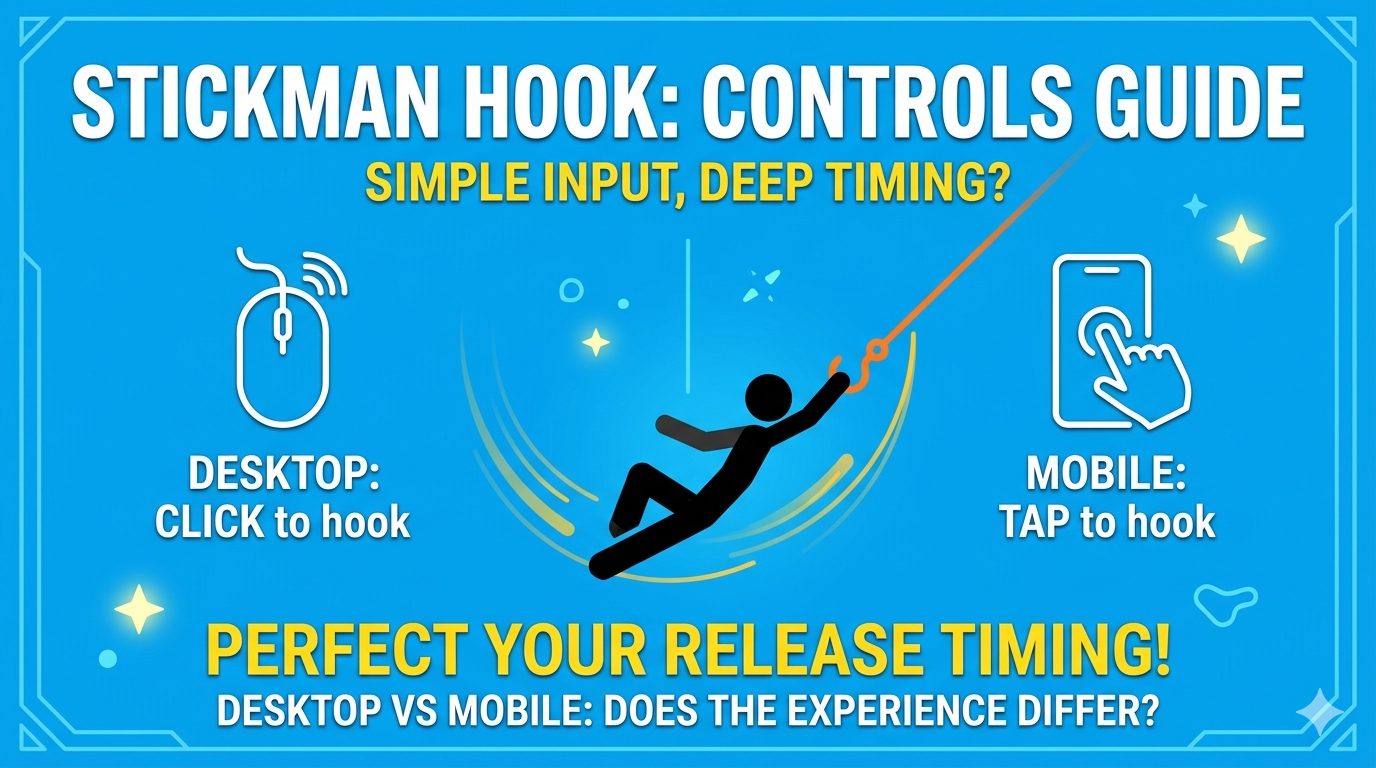
>>> TIPS TO PASS: Stickman Hook Controls: How to Play on Desktop and Mobile devices
Are All Stickman Hook Levels Unique?
Not always in a strict sense, but the game is designed to keep the experience feeling fresh for a long time.
Players often notice that certain levels or level patterns may feel familiar after extended play. That does not necessarily mean the experience becomes repetitive right away. It usually means the game reuses similar ideas, movement patterns, or challenge structures in different combinations.
Do Levels Repeat in Stickman Hook?
Some players feel like levels begin to repeat or recycle ideas after long sessions. So, does Stickman Hook repeat levels? That is a normal question, especially if you play a lot in one sitting.
In practice, repetition can happen in two forms:
- exact or near-exact level repetition
- familiar patterns that feel similar even if the level is not identical
For casual players, this usually is not a major problem because the game is built around fast sessions and quick replays. But if you are playing for a long time, you may become more aware of repeated structures.
That does not automatically make the level design bad. It often reflects how browser-friendly and replayable the game is meant to be.
How Many Levels Does Stickman Hook Have?
This is one of the most common questions players ask, but the answer can feel less clear than expected because different versions, updates, and player experiences can shape what people think of as the total number of levels.
What matters more in practice is this:
- the game offers a large enough set of stages to support repeated play
- progression is meant to feel ongoing for casual players
- the experience is built around quick level completion and immediate replay value
>>> DIVE DEEPER: Stickman Hook has over 100 levels
What Makes a Good Level in Stickman Hook?
A strong Stickman Hook level usually does three things well:
It teaches a rhythm quickly
Good levels give you just enough information to understand the movement pattern without overexplaining it.
It rewards clean timing
The best stages feel satisfying because your success comes from better momentum control, not random luck.
It stays fast
Even when a level is challenging, it usually does not waste your time. Fast resets and quick retries are part of what makes the level loop addictive.
That balance is a big part of the game’s appeal.
How to Improve on Harder Levels
If a stage keeps stopping your progress, the answer is rarely to click faster. Better performance usually comes from understanding the movement more clearly.
Look ahead instead of focusing only on the current hook point
This helps you prepare your next release instead of reacting too late.
Learn the level’s rhythm
Every level has a flow. Some reward wider swings, while others reward short and controlled releases.
Do not panic after one bad movement
A weak swing does not always mean the level is over. Sometimes a late adjustment can still save the attempt.
Use consistent controls
Playing on the same device and browser can make your timing feel more reliable.
Why Short Levels Still Feel Satisfying
Stickman Hook does not need huge stages to feel rewarding. Many levels are short, but they work because the game is built around:
- immediate retry loops
- quick feedback
- small moments of improvement
- simple controls with surprising depth
That makes the level system well-suited for short play sessions, whether you play one level or many in a row.
Do Levels Matter More Than Skins or Cosmetics?
For most players, yes.
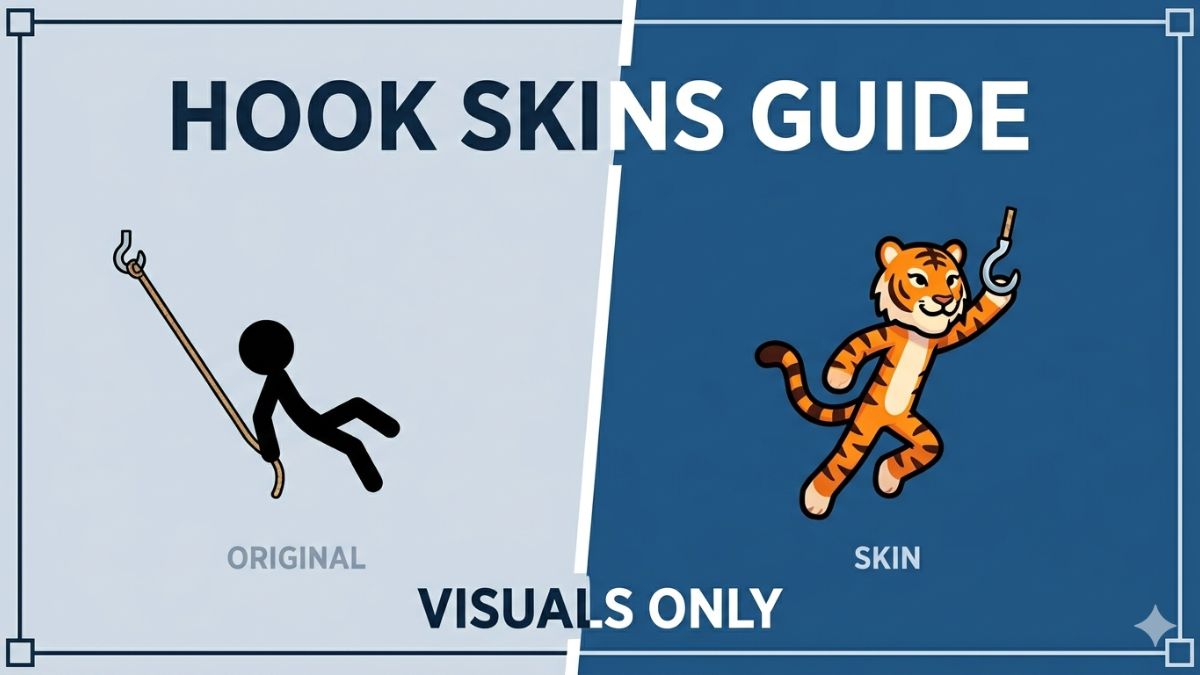
Cosmetics and unlocks can add personality, but the real reason players keep coming back is the movement and the level flow. The level system is what creates challenge, replay value, and the sense of improvement.
Browser Play and Level Progression
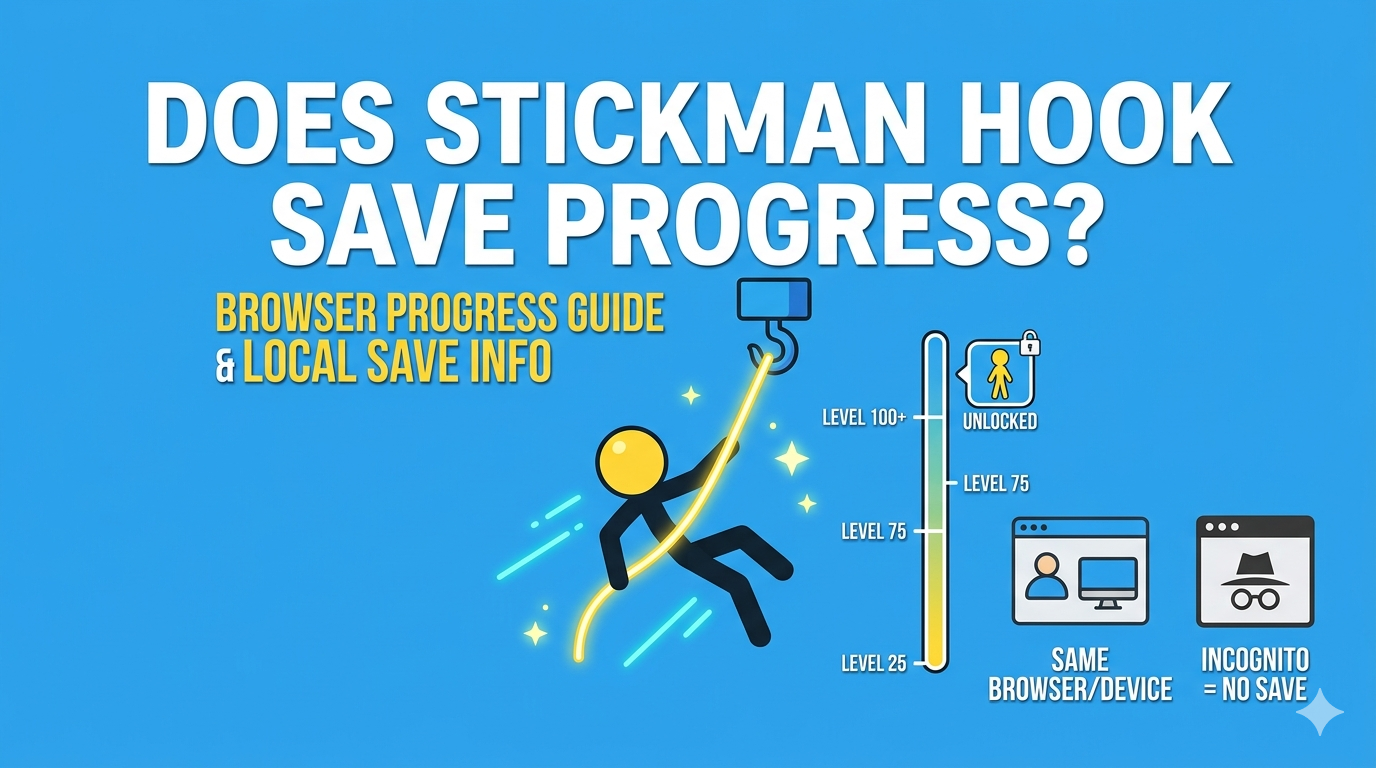
If you are playing in a browser, level progression may feel very smooth because the game is quick to access and easy to restart. But it is still worth remembering that progression and save behavior may depend on the device and browser you use.
>>> READ MORE: Does Stickman Hook Save Progress? Browser and Mobile Guide
Common Questions About Stickman Hook Levels
Do Stickman Hook levels get harder?
Yes, overall difficulty increases, but not always in a straight line. Some levels feel easier or shorter even after harder stages.
Do Stickman Hook levels repeat?
They can feel repetitive over time, especially in long sessions. Some players notice repeated structures or similar layouts.
Why do some levels feel harder even when they look simple?
Because difficulty often comes from timing, rhythm, and spacing rather than visual complexity.
What helps most on difficult levels?
Reading ahead, releasing cleanly, staying calm after mistakes, and learning each stage’s rhythm usually matter more than fast tapping.
Final Thoughts
The Stickman Hook Unblocked level system is a big reason the game stays engaging. Each stage uses the same core control mechanic, but small changes in timing, spacing, and momentum make the experience feel dynamic.
Some levels are easier, some are frustrating, and some start to feel familiar over time. But overall, the progression works because it keeps asking you to improve without making the controls harder to understand.
If you want to put these ideas into practice, head back to Stickman Hook and play a few levels with more attention to timing, rhythm, and recovery.
>>> THINGS YOU MAY NEED TO KNOW: